Snow cover, snowmelt and infiltration at Grotte du Porche
Flow measurements in a karstic conduit
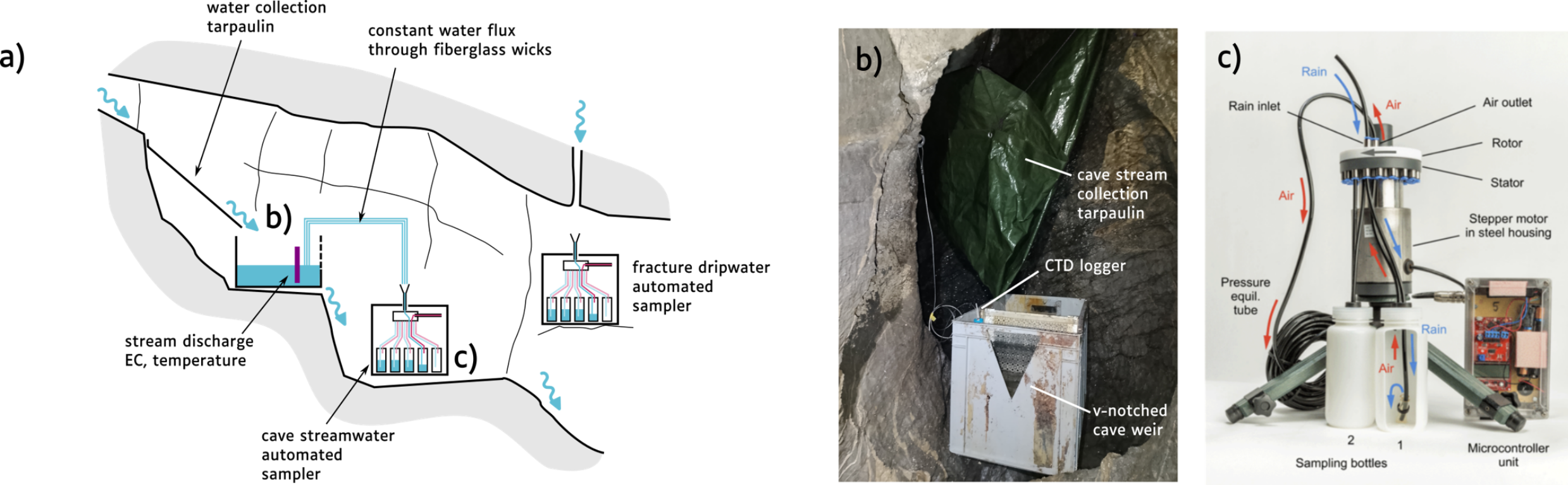
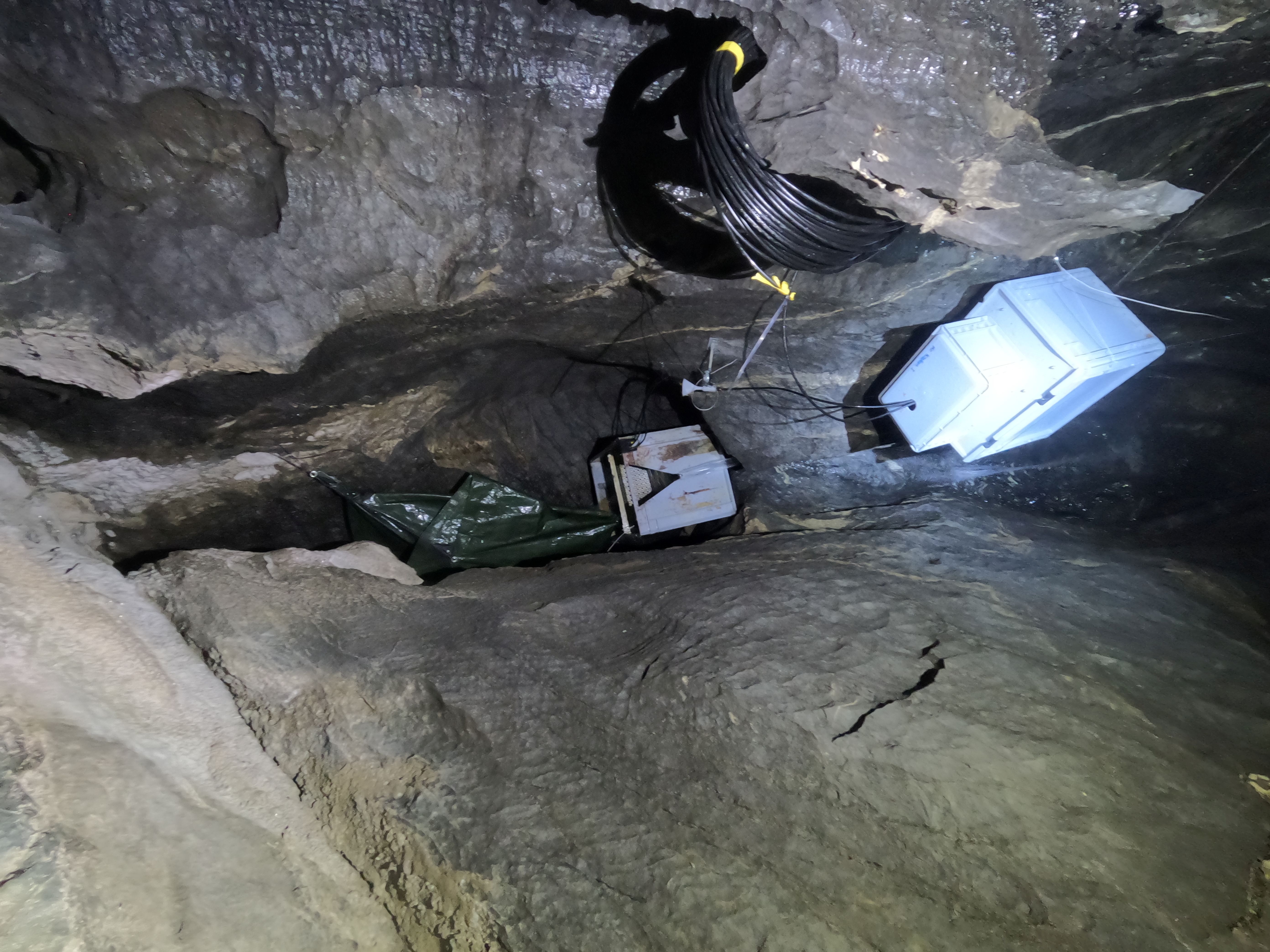
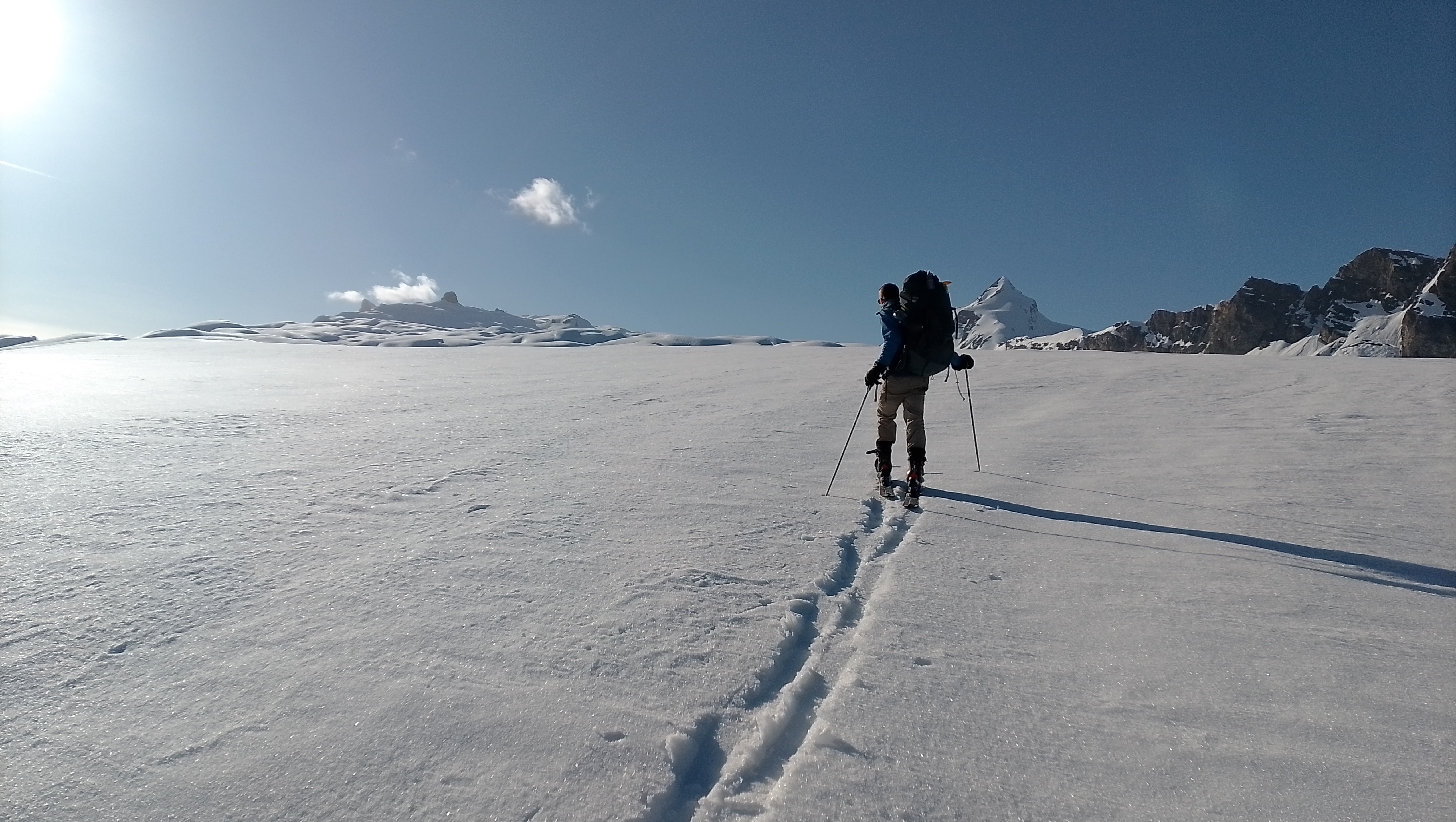
In the middle of January, Tanguy, Nina and Prune went up to the Tsanfleuron karst plateau with skitouring gear. Their objective was to install a weir inside a cave conduit to collect information about discharge variations in a shallow karst conduit. The weir was calibrated before hand to establish a rating curve between stage and discharge. Water inside the conduit is gathered by a tarpaulin and funneled into the weir. There, a pressure, electrical conductivity and temperature logger was also installed.
Characterising the snow cover: stable isotopes and snow height measurements
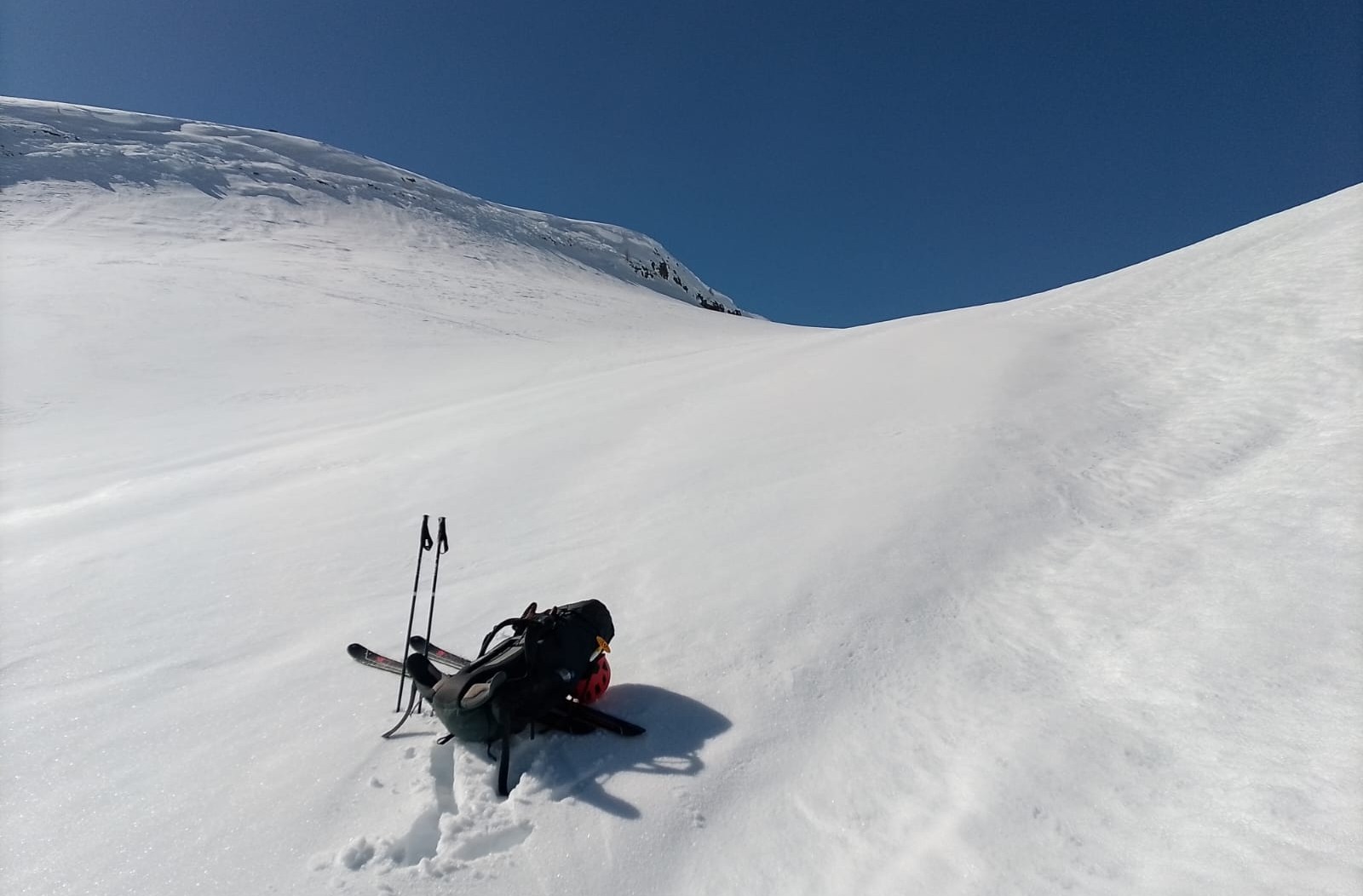
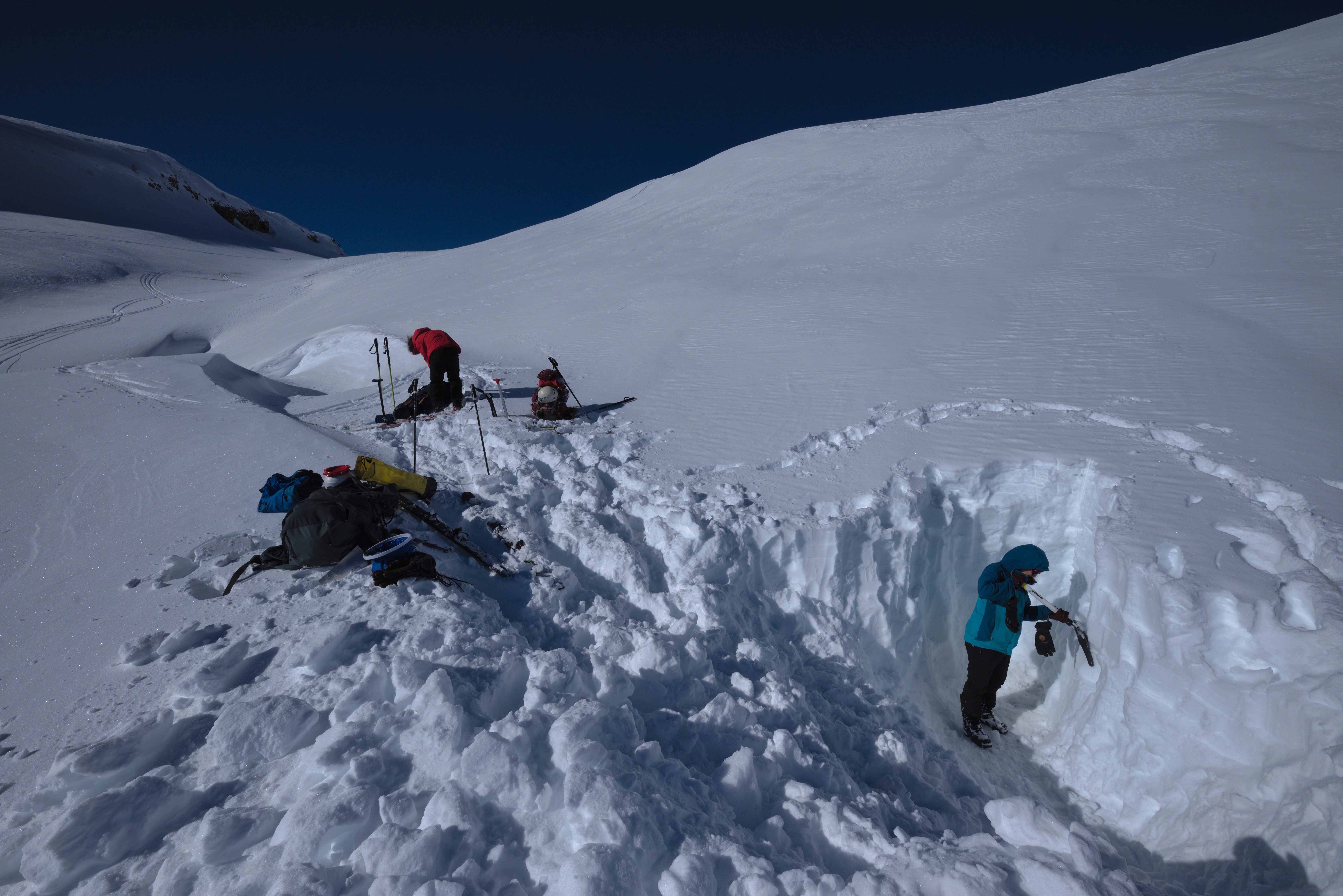
From February 2026 onwards, Tanguy, Lucas and other members of the CHYN sampled the snowpack on a monthly basis by digging snow pits in the catchment of the Grotte du Porche active conduit. Each time, thermal profiles and snow stratigraphy were recorded alongside snow density and stable isotope samples. Snow isotope profiles allow for clear layers corresponding to precipitation events to be distinguished, and the temporal evolution of the bulk isotope signal in the snowpack allows us to recover the snow melt out signal. This signal, mixed with the aquifer baseflow values, can then be recorded both at the Grotte du Porche and further downstream at the Glarey spring.
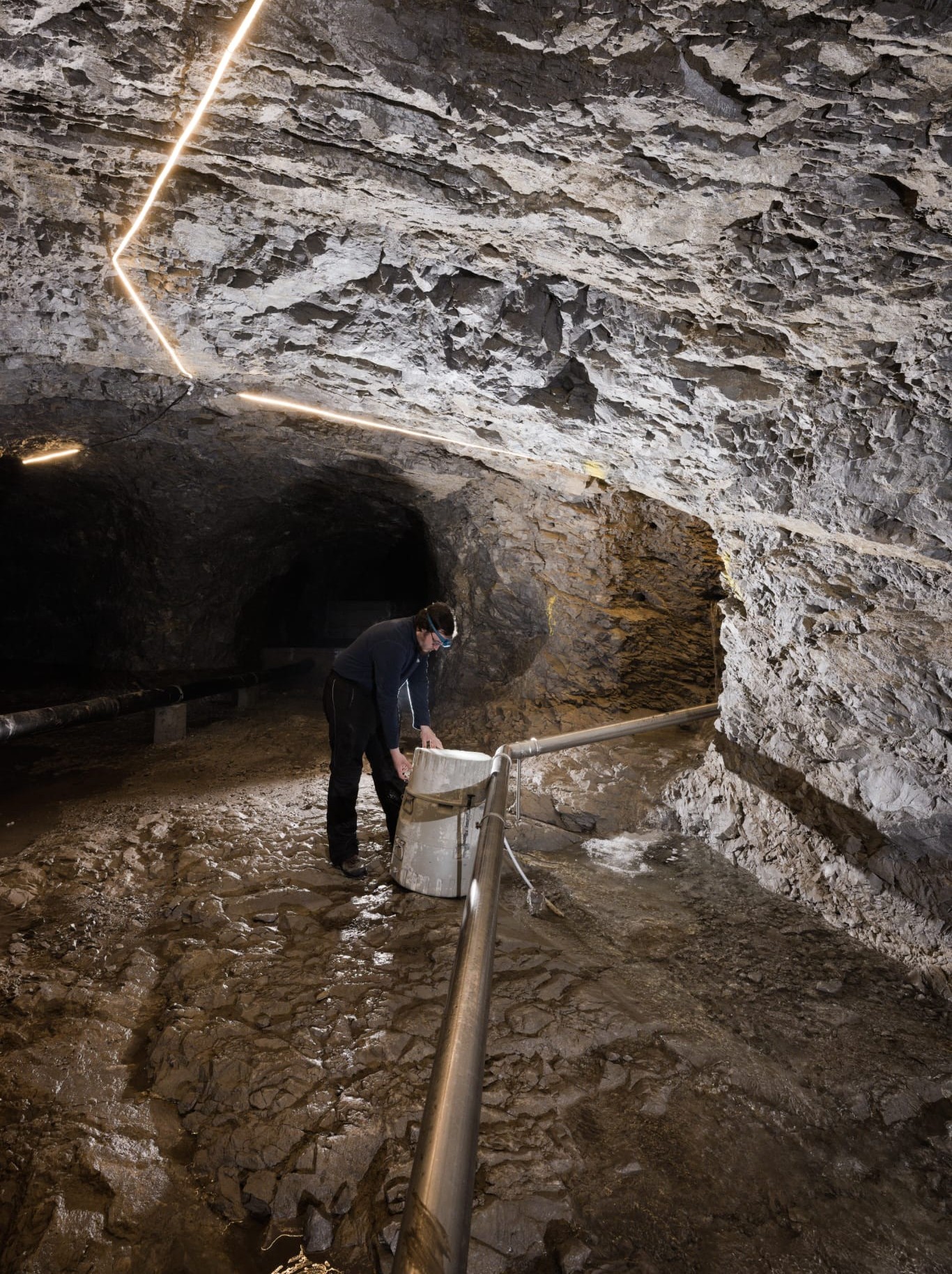
To this end, two types of automatic samplers were installed both at the Glarey spring and at the Grotte du Porche, respectively. The first (ISCO sampler pictured left below) is equipped with a pump. It is programmed to sample 500 mL of water every 60 hours and has a capacity of 24 bottles. The second (integral sampler, pictured right below) samples continuously the water from the cave weir with the aid of fiberglass wicks. It has a capacity of 18 bottles. The distribution unit changes bottle every 72 h.
Fieldwork at Tsanfleuron requires a lot of help on the ground. We have to carry heavy equipment across mountainous terrain, often crossing large distances, over significant elevation gradients. With many thanks for the help received so far, we also provide the opportunity to see an amazing landscape in pristing winter conditions.
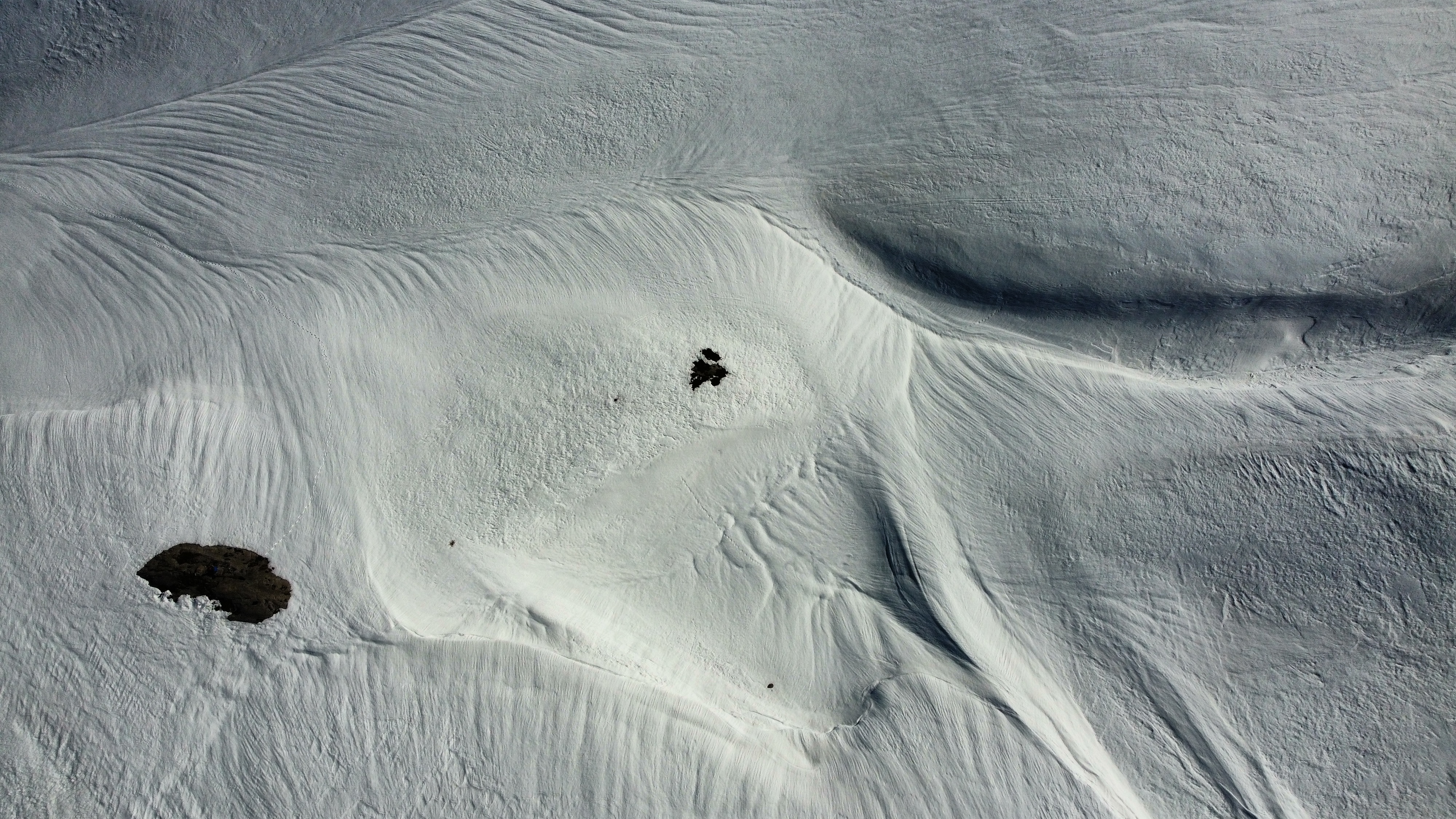
We were able to carry out drone flights over the grotte du Porche to model the snow height over the catchment at several different times of the snow pack development. Using photogrammetric workflows, we were able to reconstruct a digital elevation model of the snow surface. With proper georeferencing, it was then possible to compute a map of height differences between the snow-free topography and the snow surface, i.e. of snow depth distribution over the catchment.
Enjoy Reading This Article?
Here are some more articles you might like to read next: