Autumn 2025 fieldwork at Tsanfleuron
Monitoring the hydrochemistry at Audon
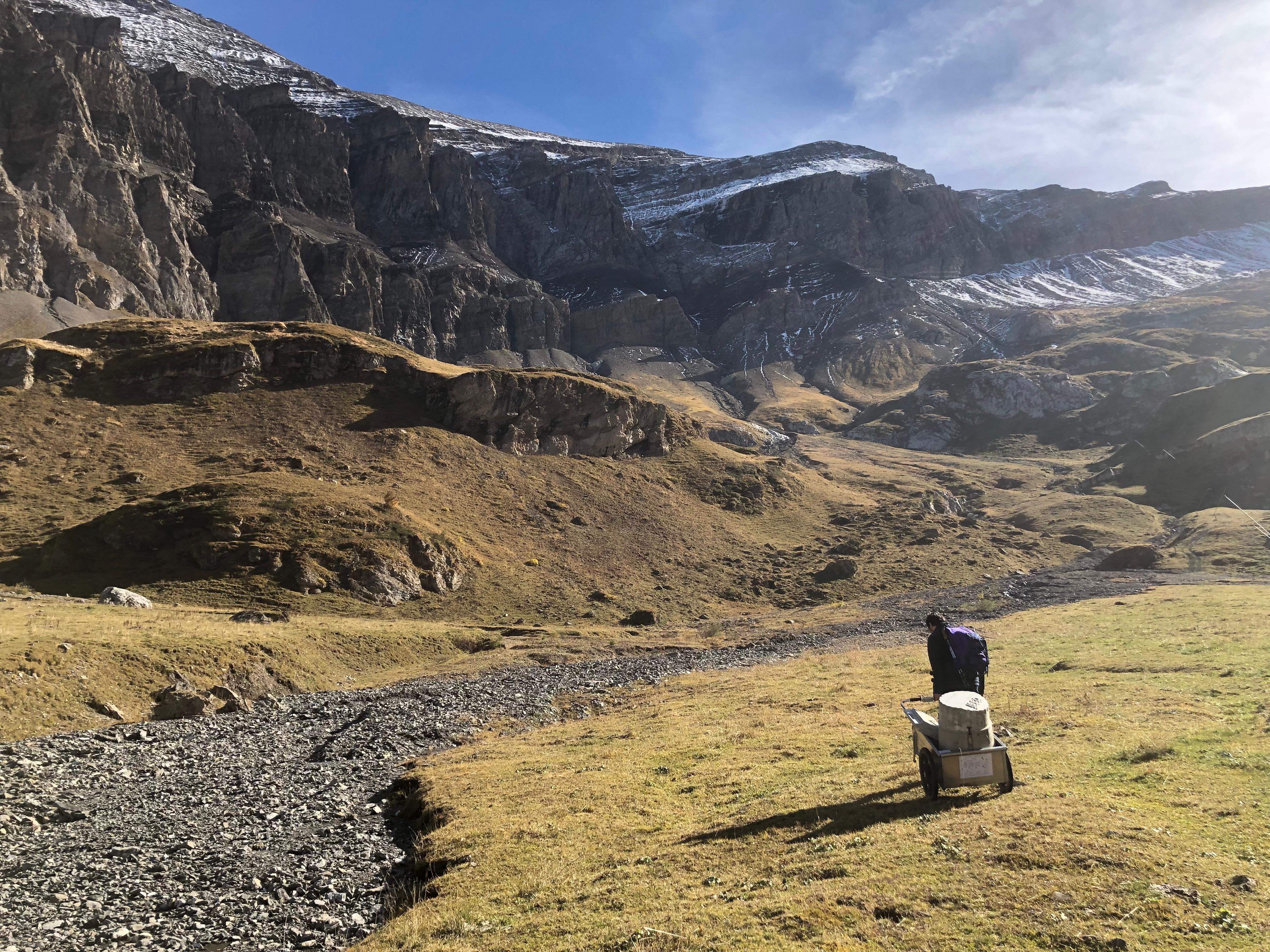
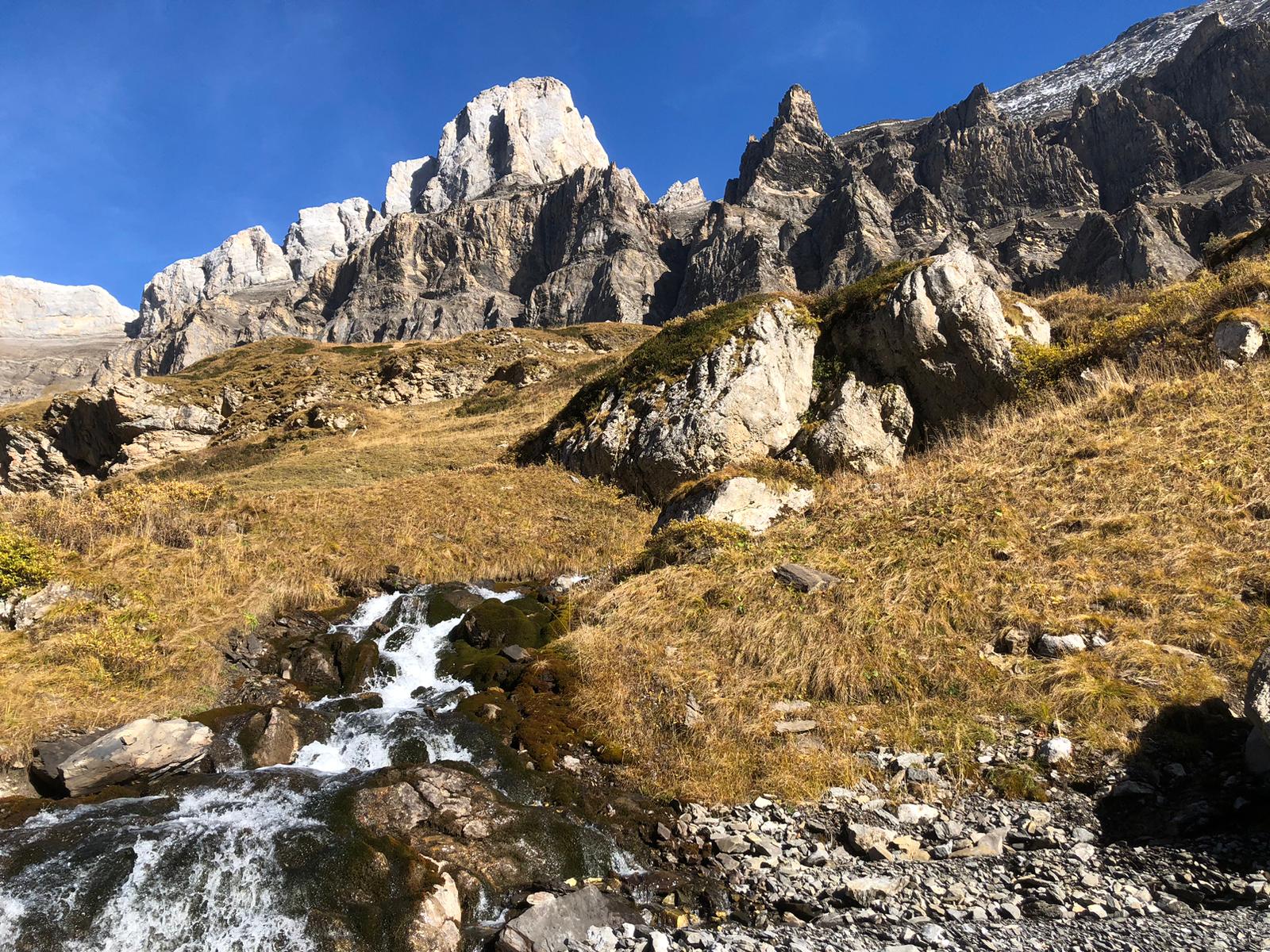
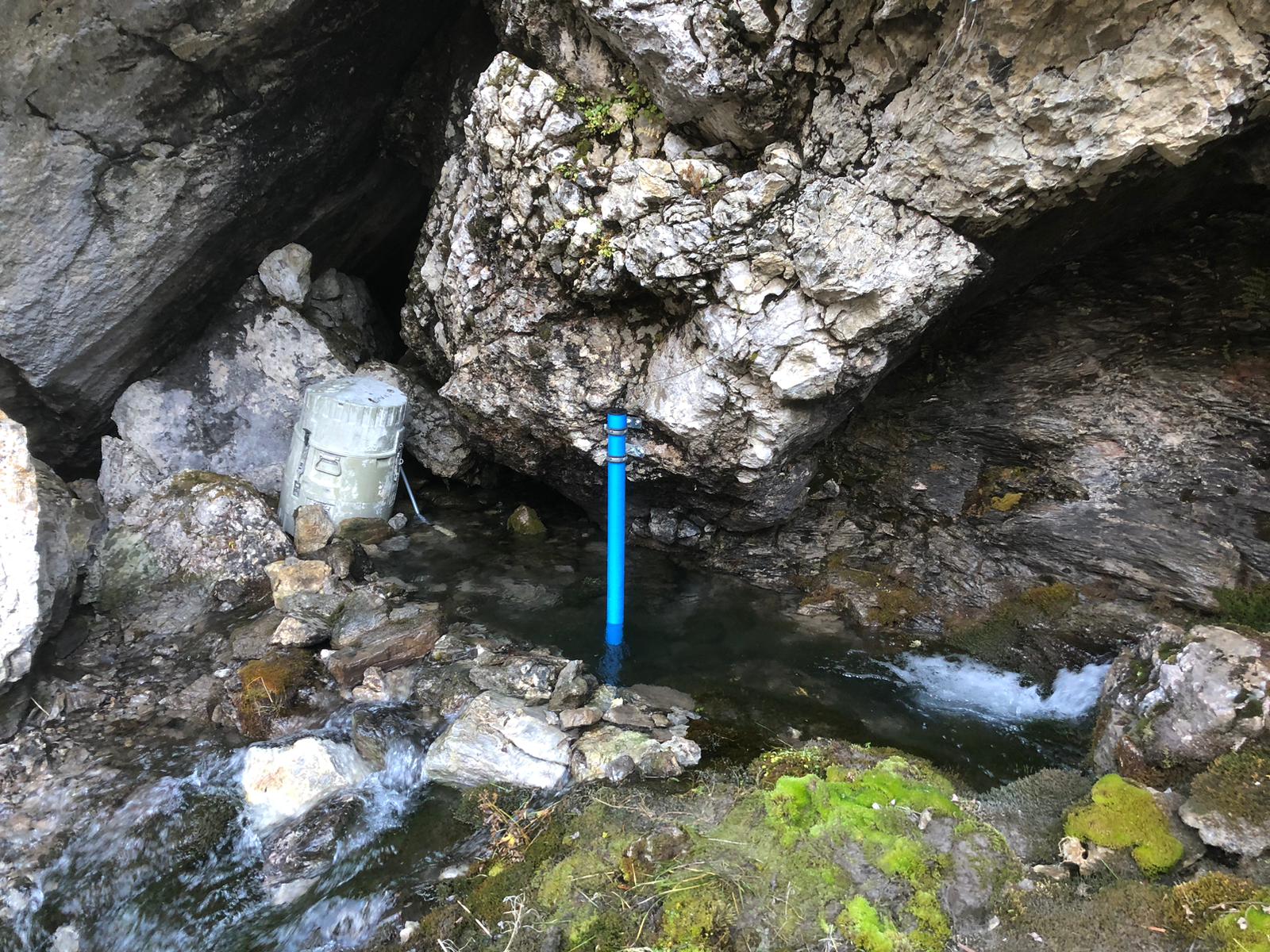
Over the course of the 2025 autumn semester, Tanguy Racine and Elie Huguenin Bergenat continued the monitoring at Audon springs. Over the course of two days, they installed a pressure sensor, a timelapse camera and an automatic water sampler at the southern spring, to begin the characterisation of the site’s hydrochemistry over the course of several days.
The water sampler, equipped with a peristatic pump was set to collect 500 mL every two hours, over 4 days, totalling 48 samples. The timelapse camera was set to look at the probe and film the water for 10s every hour.
Elie then followed the university’s course for preparing samples for major cations / anions, stable isotopes and total alkaline content measurements.
A photogrammetric survey of the Tsanfleuron glacier
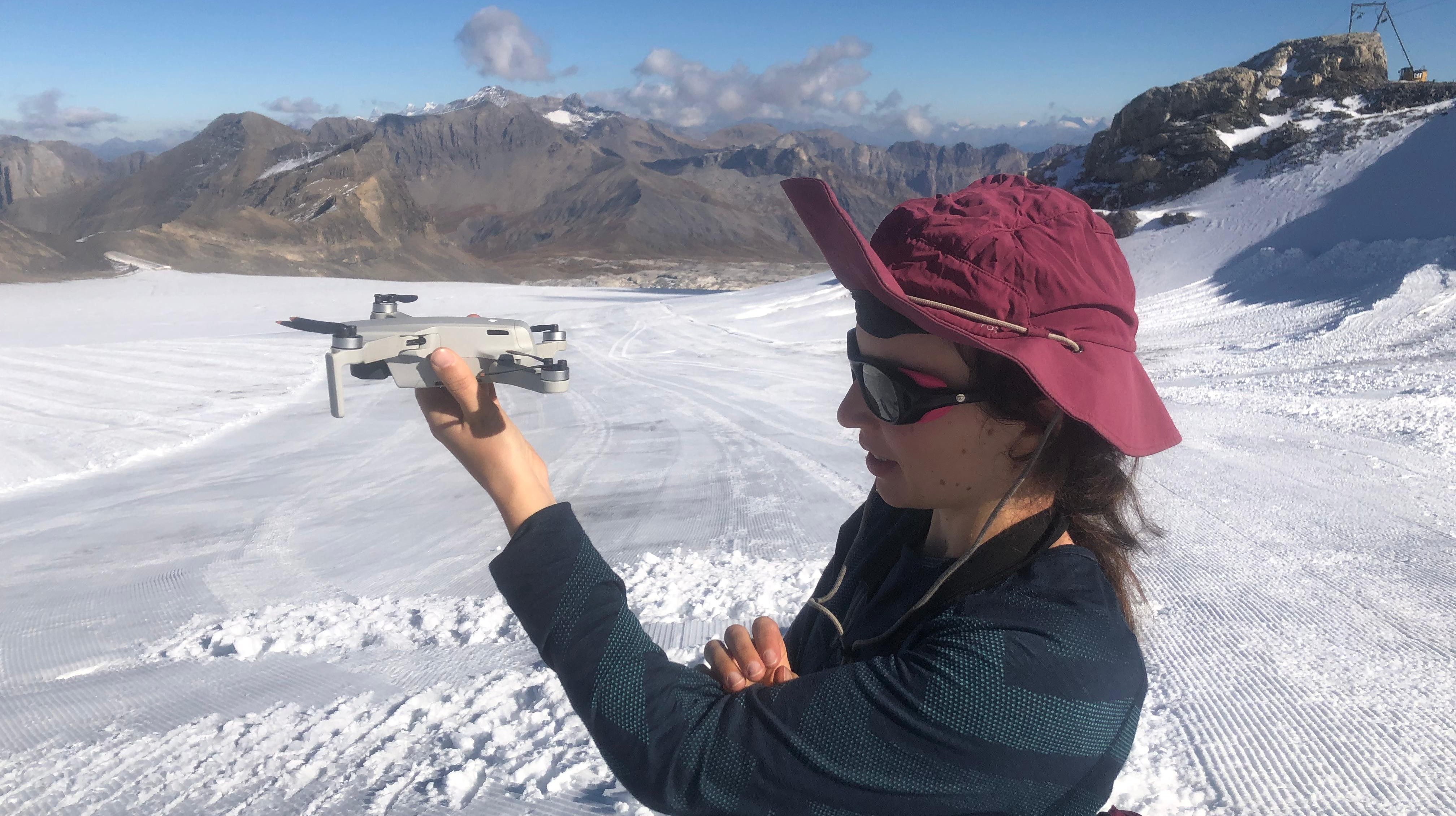
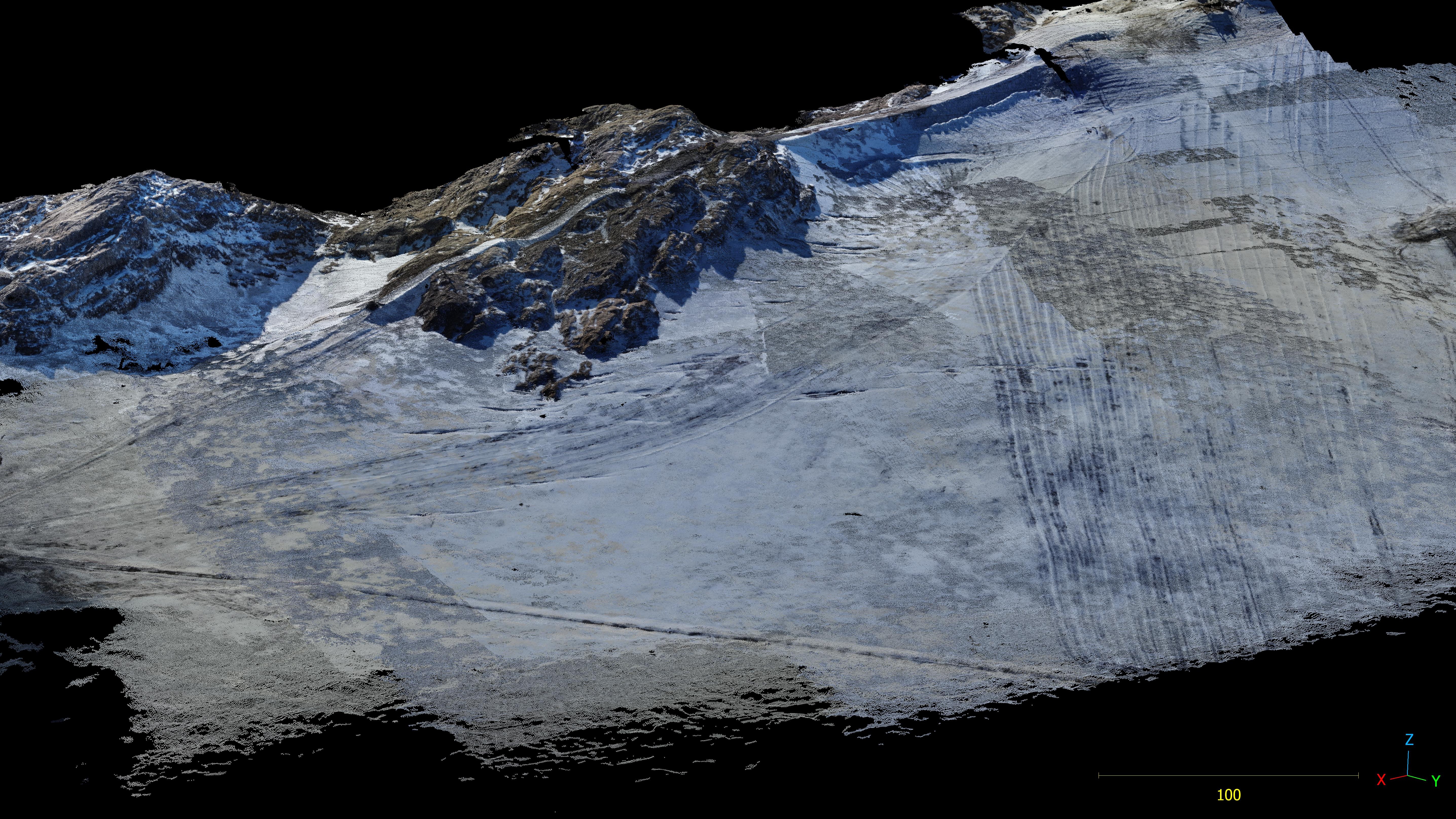
Tanguy and Domitille took the cabin up to the Glacier 3000 resort for a full day on the Tsanfleuron glacier. The aim was to conduct a photogrammetric survey of the glacier surface using the CHYN’s EbeeX drone. This flying wing requires a vigorous launch, but afterward, it can be guided by setting targets and tracks to follow.
After solving some camera connectivity issues, Tanguy and Domitille were able to send the wing for three successful missions over glacier. After this, they realised the upper part of the glacier was still missing and used Tanguy’s personal drone, a manually flown Mavic Mini 2 to patch up the missing coverage.
Visits and discoveries at the G16 cave
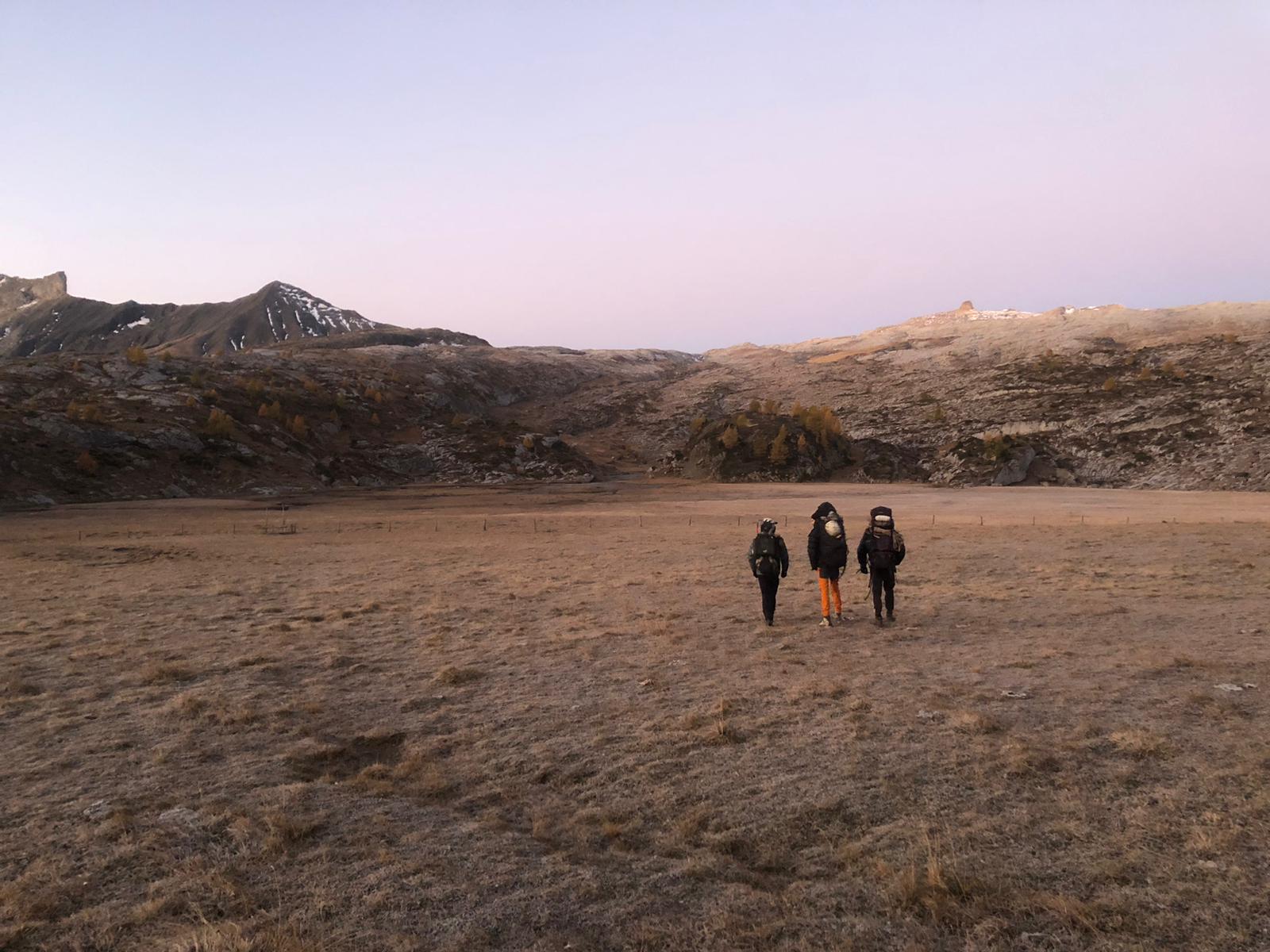
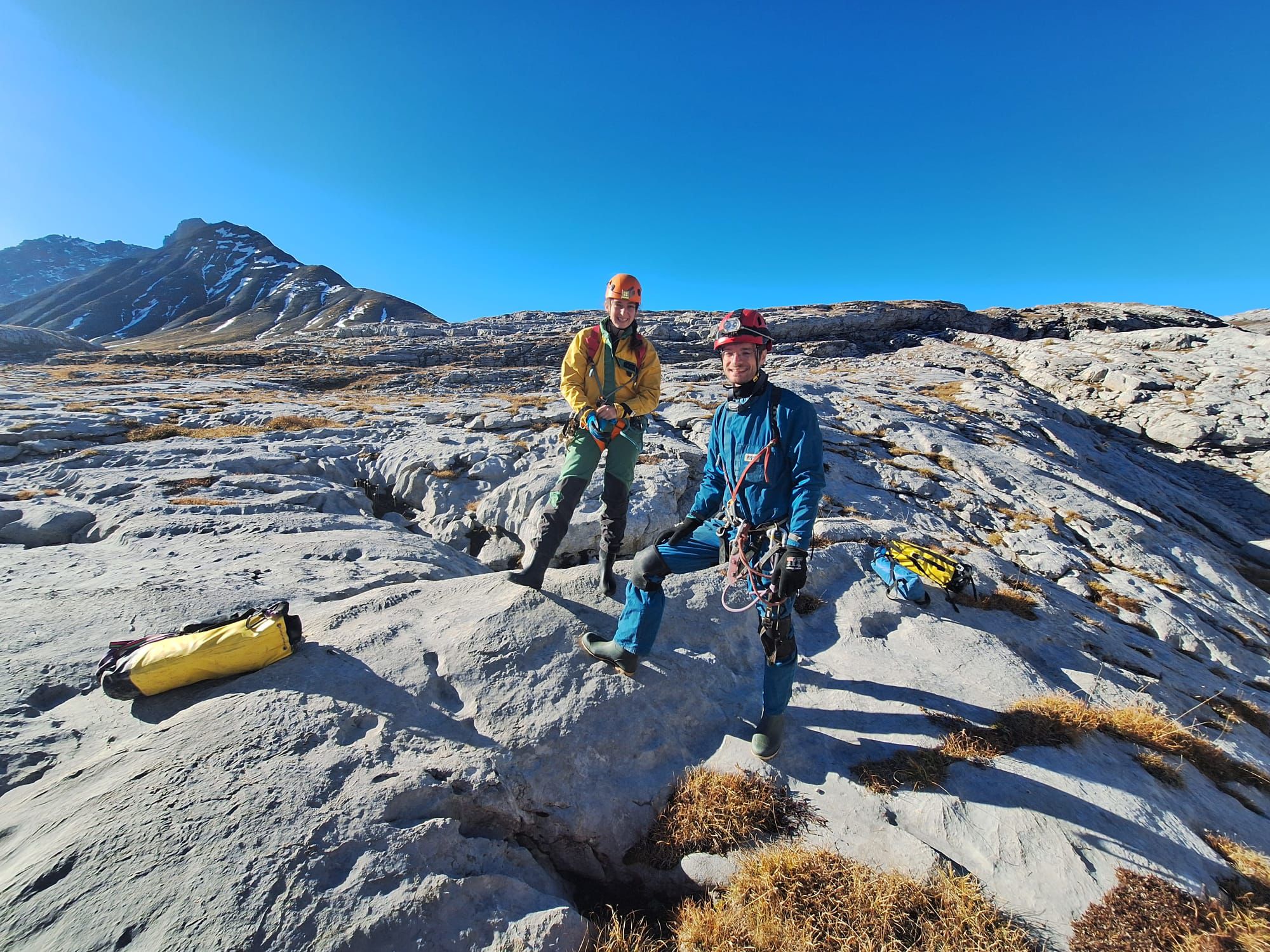
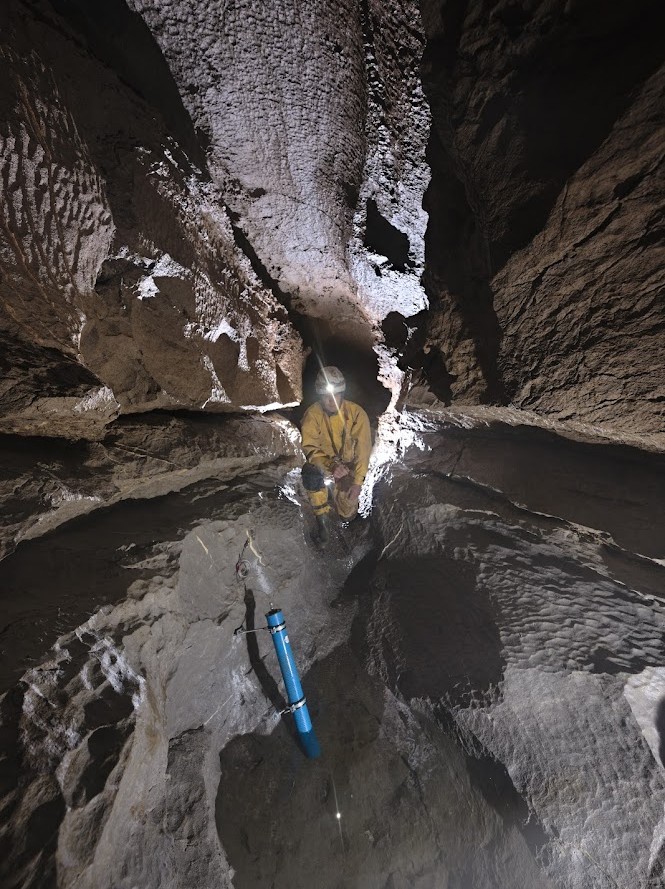
The month of October 2025 saw some renewed interest in visiting the main drain at the G16 cave. The G16 is one of the few caves containing an active river passage known on the Tsanfleuron area; another newly discovered active river passage is in the so-called “Gouffre du Boetsché”. Tanguy Racine, Prune Roche, Anthony Salamin and several members of the Jura speleological club met up at the Col du Sanetsch with two objectives: install a pressure sensor in the G16 river, and explore / sample the river of the Boetsché cave.
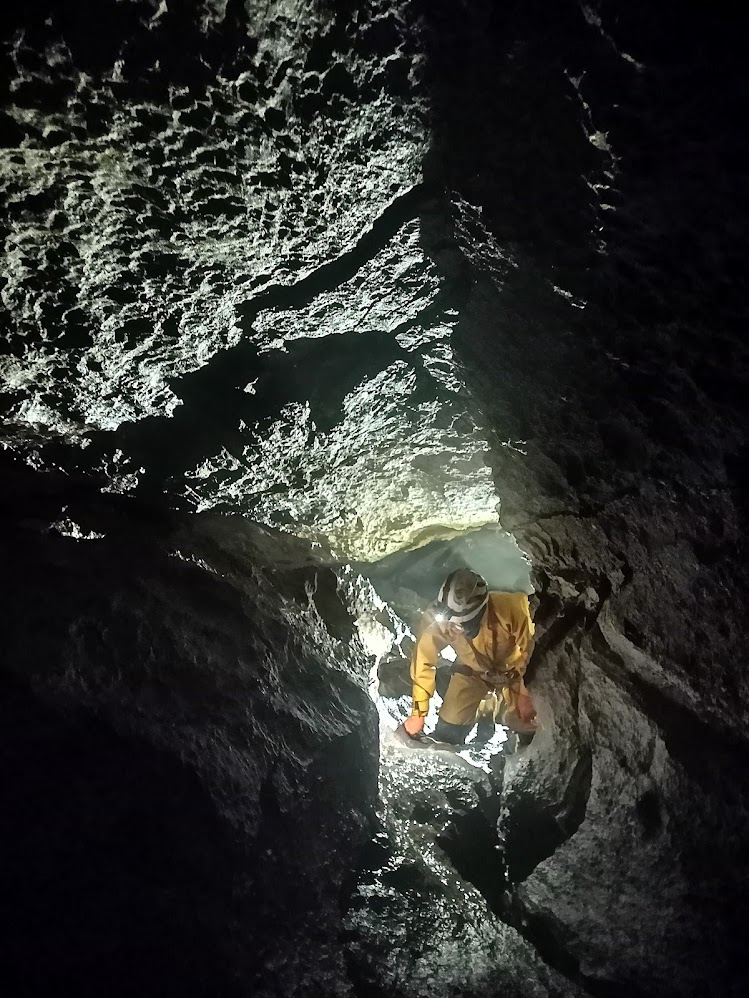
On the first visit, Tanguy, Prune and Anthony reached the river (about 0.5 L / s discharge) and installed a pressure / conductivity sensor. They continued the upstream exploration of this passage. The Jura cavers brought back a water sample from the Boetsché. On the second visit, Tanguy and Gauvain Saucy explored and mapped several more hundred metres of passage, while Lou Berry and Louis Stahelin explored downstream of the pressure sensor, finding a flooded section (a sump) about 100 m further along, whose water level was 1 m below.
Now we wait until access to the G16 river is safe again: either in the deep of winter (but a ski-touring only access to the cave makes it challenging) or during a dry summer spell. The expectation is to see the sump levels rise during periods of high recharge several metres over the probe.
Enjoy Reading This Article?
Here are some more articles you might like to read next: